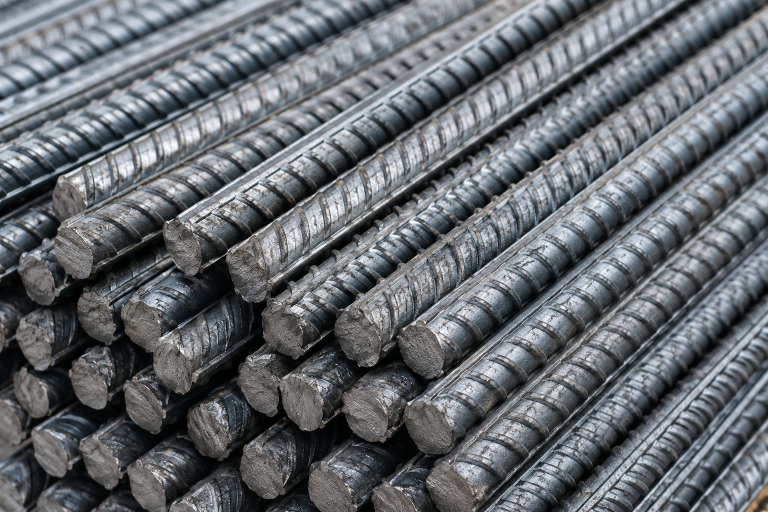
Steel is one of the most important materials used in construction. Steel provides the tensile strength that concrete alone cannot achieve, making it an essential component of reinforced concrete (RCC) structures. Whether you are building an independent house, apartment, commercial building, or industrial building, selecting the right steel is crucial for ensuring structural safety, durability, and long-term performance.
Many construction builders assume that all steel bars are the same and often make purchasing decisions based entirely on price. However, the quality, grade, ductility, and certification of steel can significantly impact the strength and lifespan of a building. Investing in high-quality steel can help to prevent structural problems, costly repairs, and safety risks in the future.
Who Should Read This?
🏠 Homeowners planning a new house 🏗️ Builders and contractors 🏛️ Architects and designers 👷 Civil and structural engineering students
At a Glance
Choosing the right steel is essential for the strength, safety, and durability of any RCC structure. High-quality BIS-certified TMT steel (IS 1786) provides better load-carrying capacity, crack resistance, and earthquake resistance performance while reducing long-term maintenance costs.
- Fe 500: Suitable for general residential construction.
- Fe 500D: Preferred for most residential structures due to its superior ductility and seismic resistance.
- Fe 550D: Recommended for high-rise buildings, bridges, and heavily loaded structures.
Avoid common mistakes such as choosing steel based only on price, buying from unverified suppliers, mixing different grades, or using heavily rusted bars.
Key Takeaway: Investing in the right quality TMT steel is an investment in your building’s Performance, safety, and Durability. Always follow your structural engineer’s specifications when selecting reinforcement steel.
Why Steel Selection Matters
Concrete is strong in compression but weak in tension. We provide steel reinforcement bars to provide the tensile strength required for structural stability to resist bending, stretching, and seismic forces. Choosing the right steel offers several benefits:
- Improves the structural strength of the building.
- Enhances resistance to earthquakes and heavy loads.
- Increases the lifespan of the structure.
- Reduces the chances of structural cracks.
- Minimizes maintenance and repair costs.
- Ensures compliance with national construction standards.
Selecting poor-quality steel may compromise the safety and durability of the entire structure.
What Are the Specifications for Reinforcement Steel Under IS 1786?
The quality of reinforcement steel used in reinforced cement concrete (RCC) structures is governed by IS 1786 – High Strength Deformed Steel Bars and Wires for Concrete Reinforcement, published by the Bureau of Indian Standards (BIS). This standard specifies the minimum requirements that TMT (Thermo-Mechanically Treated) steel bars must satisfy to ensure structural safety, durability, and reliable performance throughout the life of a building. Ductile steel bars can undergo greater deformation before failure, making them more suitable for earthquake-resistant structures and buildings subjected to dynamic loads.
In addition, IS 1786 limits the percentage of harmful elements such as carbon, sulphur, and phosphorus, as excessive quantities of these elements can reduce ductility, weldability, and long-term performance.
Common Steel Grades Used in Construction
Steel grade indicates strength, composition, or performance level. For RCC work in India, TMT bars are commonly specified as Fe 415, Fe 500, Fe 500D, Fe 550, or Fe 600. IS 1786 identifies these grades for high-strength deformed reinforcement bars and wires.
| Steel Grade | Yield Strength | Ductility | Best Application |
| Fe 415 | 415 MPa | Good | Small residential buildings and low-rise structures |
| Fe 500 | 500 MPa | Good | General residential construction |
| Fe 500D | 500 MPa | Excellent | Residential buildings, earthquake-resistant structures |
| Fe 550D | 550 MPa | Excellent | High-rise buildings, bridges, industrial structures |
| Fe 600 | 600 MPa | Moderate | Heavy-duty and specialized engineering projects |
Table 1.0: Common TMT Steel Grades and Their Applications
What is TMT Steel?
TMT (Thermo-Mechanically Treated) steel is a high-strength reinforcement bar that forms the backbone of reinforced cement concrete (RCC) structures. It is manufactured using an advanced heat treatment process, giving it a tough outer layer for strength and a flexible inner core for better durability. TMT bars are highly resistant to corrosion, earthquakes, and heavy loads, making them the preferred choice for modern construction. They are available in grades such as Fe 500, Fe 500D, Fe 550D, and Fe 600, as specified under IS 1786, to suit different structural requirements.
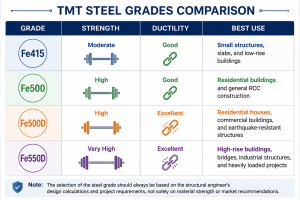
Fe 500
Suitable for general residential construction where standard strength requirements are adequate.
Fe 500D
One of the most preferred grades for residential buildings. This type of steel has better flexibility and absorbs higher stresses without sudden failure. It is an excellent choice for earthquake-prone regions.
Fe 550D
Offers higher strength while maintaining good ductility. It is commonly used in high-rise buildings, bridges, and heavily loaded structures. The selection of steel grade should always be based on the structural engineer’s design requirements rather than personal preference or market recommendations.
Common Mistakes
Many construction projects experience quality issues due to avoidable mistakes, such as:
- Choosing steel based only on price.
- Buying from unverified suppliers.
- Ignoring BIS certification.
- Mixing different steel grades without engineering approval.
- Using excessively rusted reinforcement bars.
- Not checking the bar diameter or weight.
- Failing to verify the Mill Test Certificate.
Being aware of these mistakes can help ensure a stronger and more reliable structure.
Checklist for buying steel
✔ BIS Certification
✔ Mill Test Certificate
✔ Brand Name
✔ Proper Rib Pattern
✔ Correct Weight
✔ No Heavy Rust
✔ Correct Grade
✔ Buy from an Authorized Dealer
Consult a Structural Engineer
Steel selection should never be based on advertisements or recommendations alone. A structural engineer determines the appropriate steel grade, bar diameter, spacing, and reinforcement detailing based on Building loads, Soil conditions, Building height, Structural design, Seismic zone, and applicable building codes. To reach an experienced structural consultant, click here
Expert Verdict
Choosing the right steel is about much more than selecting a well-known brand or the lowest price. It is a decision that directly affects the strength, safety, and long-term performance of your building. Always use BIS-certified TMT steel that complies with IS 1786 and ensure the grade matches your structural engineer’s design. A small investment in quality steel today can prevent costly repairs and structural issues in the future.
At Strucspec, our advice is simple: Don't compromise on reinforcement steel. Build with certified materials, follow engineered specifications, and invest in quality—because a safe building starts with the right foundation and the right steel.
Frequently Asked Questions (FAQs)
1. What is TMT steel?
TMT (Thermo-Mechanically Treated) steel is a high-strength reinforcement bar used in reinforced concrete (RCC) structures. It is manufactured using a specialized heat treatment process that gives it a strong outer surface and a ductile inner core, making it durable, corrosion-resistant, and suitable for earthquake-resistant construction.
2. How can I identify good-quality TMT steel bars?
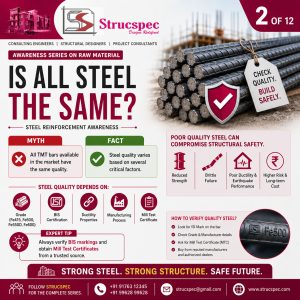
Choose TMT bars that are BIS-certified (IS 1786), have clear manufacturer markings, uniform rib patterns, the correct weight and diameter, and are supplied with a Mill Test Certificate (MTC). Always purchase steel from an authorized dealer or a reputed manufacturer.
3. Which TMT steel grade is best for house construction?
For most residential buildings, Fe 500D is considered one of the best choices because it provides an excellent balance of strength and ductility. However, the appropriate steel grade should always be selected based on the structural engineer’s design and project requirements.
4. What is the difference between Fe 500 and Fe 500D steel?
Both grades have a minimum yield strength of 500 MPa, but Fe 500D offers higher ductility and better elongation than Fe 500. This makes Fe 500D more suitable for earthquake-resistant structures and buildings subjected to dynamic loads.
Conclusion
Choosing the right steel is one of the most important decisions in any construction project. High-quality, BIS-certified TMT bars of the appropriate grade contribute significantly to a building’s strength, durability, and safety. Compromising on steel quality can lead to costly repairs and potential structural failures. Before purchasing steel, always verify its certification, inspect its quality, review the test certificate, and seek guidance from a qualified structural engineer. Feel free to contact us via our website-https://www.strucspec.com/. Remember, the strength of your building depends not only on good design but also on the quality of the materials used. Investing in the right steel today is an investment in the safety and longevity of your dream home.
About the Author
Er. R. Sivashanmugam, M.Tech., MIE, Chartered Engineer
Sivashanmugam R is a Structural Consultant with over 25 years of experience in structural design, RCC detailing, structural audits, and construction quality assurance. Through Strucspec, he has contributed to the design and supervision of hundreds of residential, commercial, and industrial projects across India. To See the List of Services Kindly Click Here
References
Before starting your construction, you may also find these guides helpful:
https://cornflowerblue-toad-293629.hostingersite.com/2026/07/06/sand-for-construction/